




For hospital pharmacy leaders, ensuring the right medication is available at the right time is one of the most critical responsibilities in healthcare operations.
Yet many hospitals continue to struggle with medication shortages, emergency purchasing, inventory inaccuracies, and disconnected procurement processes. While pharmacy teams are expected to maintain optimal inventory levels, they often lack real-time visibility into medication consumption, supply chain disruptions, and purchasing activities.
The result is a constant balancing act between patient safety, operational efficiency, and cost control.
As healthcare organizations face increasing pressure to improve outcomes while reducing costs, leading hospitals are turning to real-time pharmacy and supply chain integration to create a more connected and resilient medication management process.
Why Hospital Pharmacies Continue to Experience Stockouts
Many medication shortages are not caused by a lack of inventory but by a lack of visibility.
In many healthcare organizations, pharmacy management, procurement, and supply chain systems operate independently. Critical inventory information is often distributed across multiple platforms, making it difficult to identify risks before they impact patient care.
Common challenges include:
Disconnected Pharmacy and Procurement Workflows
Without integration, pharmacy and procurement teams often work with different data. Delayed information sharing slows replenishment decisions and creates gaps between medication demand and supply.
Manual Reordering Processes
Many hospitals still rely on manual purchasing requests and fixed reorder points, making it difficult to respond quickly to changing medication demand and avoid stock imbalances.
Limited Real-Time Inventory Visibility
Without continuous inventory visibility, shortages are often identified too late, forcing pharmacies to rely on emergency purchasing to maintain patient care.

The Operational Impact of Poor Pharmacy-Supply Chain Alignment
When pharmacy and supply chain operations are disconnected, the consequences extend beyond inventory management.
Hospital leaders frequently experience:
- Increased emergency medication orders
- Higher procurement and logistics costs
- Delayed patient treatments
- Reduced staff productivity
- Compliance and audit challenges
- Limited forecasting capabilities
- Greater operational risk
Most importantly, medication shortages can directly impact patient safety, clinician confidence, and overall quality of care.
For today’s healthcare organizations, ensuring medication availability has become both a clinical priority and a strategic operational objective.
Why Real-Time Pharmacy and Supply Chain Integration Matters
Modern hospital pharmacies require more than inventory management software.
They need an integrated ecosystem where medication consumption, inventory levels, warehouse operations, procurement activities, supplier performance, and financial data are synchronized in real time.
Real-time integration enables hospitals to:
- Monitor medication usage in real time
- Automatically trigger replenishment workflows
- Coordinate procurement activities across departments
- Improve supplier collaboration
- Maintain complete inventory visibility
- Reduce manual interventions
They need an integrated ecosystem where medication consumption, inventory levels, warehouse operations, procurement activities, supplier performance, and financial data are synchronized in real time.
How VizHIS Connects Pharmacy and Supply Chain
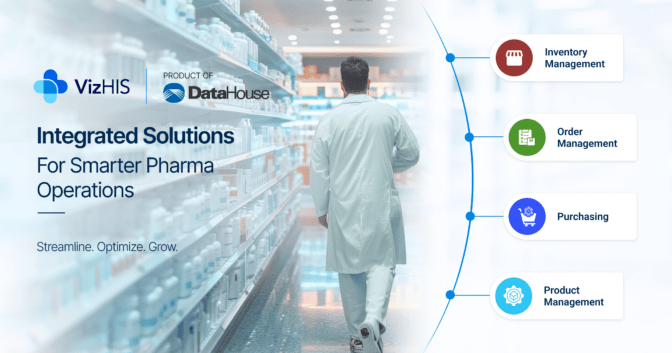
The VizHIS Pharmacy Module, integrated with Supply Chain Management (SCM), creates one connected workflow that manages medications throughout their entire lifecycle, from procurement to patient dispensing.
Instead of relying on disconnected systems and manual coordination, pharmacy teams, warehouse personnel, procurement officers, and finance departments work from the same real-time operational data.
The Business Outcomes Hospital Leaders Can Expect
When pharmacy operations and supply chain management operate as one connected ecosystem, hospitals can achieve measurable improvements across both clinical and operational performance. Organizations can expect:
- Fewer emergency medication orders
- Reduced procurement costs
- Improved medication availability
- Better inventory utilization
- Stronger regulatory compliance
- Enhanced operational efficiency
- Reduced stockout incidents
- These outcomes enable pharmacy lea
These outcomes enable pharmacy leaders to spend less time managing inventory issues and more time supporting clinical excellence.
Ready to Modernize Your Hospital Pharmacy?
Managing medications effectively requires more than inventory control. Today’s hospitals need real-time visibility across pharmacy, procurement, warehouse, and supply chain operations to ensure medication availability, improve operational efficiency, and support better patient outcomes.
VizHIS Pharmacy, integrated with Supply Chain Management, empowers hospitals to streamline medication workflows, strengthen inventory control, automate procurement processes, and build a connected medication management ecosystem.
Whether you’re looking to eliminate stockouts, reduce procurement costs, or modernize pharmacy operations, DataHouse can help.
Explore our Hospital Pharmacy Management solution to learn how integrated pharmacy technology supports smarter medication workflows and operational excellence.
Ready to see it in action? Schedule a personalized demo today, or contact us for a deeper dive into the VizHIS Pharmacy modules